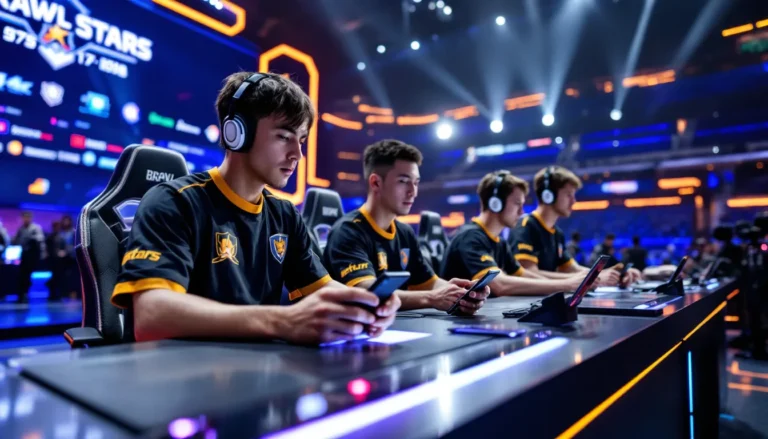


Esports organizations aren’t just stacking trophies, they’re building multimillion-dollar empires. While the spectacle of championship-winning plays grabs headlines, the financial machinery behind these teams operates like a complex RPG skill tree, with revenue streams branching in a dozen different directions. From six-figure sponsorship deals to player transfer fees that rival traditional sports, the business model has matured far beyond prize pools and merch sales.
In 2026, top-tier organizations like Team Liquid, FaZe Clan, and G2 Esports generate revenue through an intricate web of income sources that would make any CFO’s spreadsheet look like a raid boss loot table. Understanding how these teams monetize their brands reveals not just the health of the esports economy, but where the industry is headed as it battles for mainstream legitimacy alongside traditional sports leagues.
Key Takeaways
- Esports teams make money through diversified revenue streams—sponsorships (50-70% of income), prize money, media rights, merchandise, and content creation—with top organizations earning $5M+ annually from individual sponsorship deals alone.
- Sponsorships represent the most reliable income source, with endemic sponsors (gaming hardware, energy drinks) and non-endemic partners (Fortune 500 companies, luxury brands) both contributing significantly to team valuations.
- How esports teams make money has shifted dramatically from relying on tournament prize pools to building media companies, with streaming exclusivity deals, in-game digital items, and content monetization generating consistent revenue streams.
- Franchise fees ($10M-$35M+) provide permanent league participation and revenue-sharing access to media rights and sponsorships, though teams face risk if the league underperforms, as seen with Overwatch League’s collapse.
- Player transfer markets create secondary revenue opportunities through buyouts ($50K-$1M+ for star players) and development sales, allowing teams to profit from scouting and player improvements.
- Emerging revenue sources like metaverse activations, virtual events, subscription fan clubs, and betting partnerships are adding incremental income, though crypto volatility requires cautious evaluation of legitimacy and brand alignment.
Sponsorships and Brand Partnerships
Sponsorships represent the single largest revenue stream for most esports organizations, often accounting for 50-70% of total income. Unlike prize money, which fluctuates wildly based on tournament performance, sponsorship deals provide the consistent cash flow teams need to pay salaries, cover bootcamp expenses, and expand operations.
The value proposition is straightforward: brands pay for access to esports’ young, digitally-native audience. A mid-tier team might secure $500K-$2M annually from sponsors, while marquee organizations like TSM or Cloud9 command deals worth $5M+ per year from individual partners. These agreements typically include jersey placement, social media obligations, content integrations, and appearance requirements at sponsor events.
Endemic vs. Non-Endemic Sponsors
Endemic sponsors, companies selling gaming hardware, peripherals, energy drinks, or streaming services, were esports’ original benefactors. Brands like Logitech, HyperX, Red Bull, and Twitch understood the audience from day one. These partnerships feel natural: a Counter-Strike team using Razer mice or a League of Legends squad wearing jerseys with Intel logos inside.
Endemic deals often include product stipulations. Players must use the sponsor’s gear during matches and streams, which means teams negotiate not just for cash but for top-tier equipment. A keyboard sponsorship might be worth $100K annually plus custom gear for the entire roster.
Non-endemic sponsors entered the space as esports viewership exploded. Now you’ll see BMW partnering with G2 Esports, Louis Vuitton designing trophy cases for League of Legends Worlds, and State Farm sponsoring top esports teams in North America. These Fortune 500 companies bring massive budgets but often require more education about the space and careful brand alignment to avoid cringe-worthy activations that get roasted on Reddit.
The shift toward non-endemic money has been critical for scaling team valuations. When a global bank or automotive brand signs a deal, it signals esports has graduated from niche hobby to legitimate marketing channel.
Sponsorship Deal Structures and Revenue Potential
Deals come in several flavors, each with different economics:
- Fixed annual fees: Guaranteed money regardless of performance. A team might sign a two-year, $1.5M deal with a peripheral brand for jersey placement and quarterly content deliverables.
- Performance bonuses: Additional payouts tied to tournament results, social media reach, or content view counts. Win a major? That could trigger a $50K-$100K bonus clause.
- Revenue share: Common with apparel or merchandise partners where the sponsor manufactures products and splits profits 50/50 or 60/40.
- Equity deals: Rare but growing. Some sponsors take small ownership stakes instead of pure cash outlays, betting on long-term team appreciation.
The most sophisticated organizations stack 10-20 sponsors across different categories: peripherals, PCs, monitors, chairs, nutrition, betting/fantasy, banking, automotive, and lifestyle brands. Category exclusivity is key, you can’t have both Logitech and Razer as mouse sponsors simultaneously.
Tournament Prize Money and Competition Winnings
Prize money is esports’ most visible revenue stream, but it’s often overestimated by casual fans. Yes, Dota 2’s The International prize pools exceed $40M, and individual players have banked seven-figure paydays. But for most teams across most titles, tournament winnings represent only 10-20% of annual revenue, and that’s before splits and taxes.
The economics vary wildly by game. Dota 2 and Counter-Strike 2 offer robust third-party tournament circuits with frequent prize opportunities. A top CS2 team competing in ESL Pro League, BLAST Premier, and IEM events might earn $500K-$2M in prize money annually if they perform well. Meanwhile, franchised leagues like the League of Legends Championship Series (LCS) or Call of Duty League (CDL) offer smaller but more predictable prize pools distributed across regular season and playoffs.
Mobile esports like PUBG Mobile and Honor of Kings have exploded in Asia, with regional tournaments offering $500K-$2M pools. According to competitive records tracked by match result databases, tier-one organizations often field rosters across 5-8 different game titles to diversify their prize money exposure.
How Prize Pools Are Distributed Among Teams
Here’s where the math gets brutal. Prize money doesn’t go straight into team coffers, it gets sliced multiple ways:
- Player cuts: Most contracts stipulate that players receive 50-70% of prize winnings. On a $100K tournament payout, players might take $60K-$70K, leaving the organization with $30K-$50K.
- Coaching staff shares: Coaches, analysts, and managers often receive 5-15% of the prize pool or a negotiated bonus.
- Taxes: Tournaments withhold taxes based on the host country. A US tournament might withhold 30% for international players. Teams and players then owe additional taxes in their home countries.
- League/platform fees: Some ecosystems take a cut before distribution. Franchised leagues may allocate winnings differently than open tournaments.
After all deductions, a team that “won $500K” might see $100K-$150K in actual organizational revenue. This is why colleges with esports programs often focus on scholarships and player development rather than prize-hunting, the financial return is unpredictable.
The feast-or-famine nature of prize money also creates roster instability. A team that dominates one year but fails to qualify for majors the next sees revenue crater. Smart organizations use sponsorships and media deals to smooth out this volatility rather than building budgets around optimistic tournament projections.
Media Rights and Broadcasting Deals
Media rights have become the holy grail of esports monetization, mirroring how traditional sports leagues generate billions from broadcasting agreements. When Riot Games sold League of Legends LCS broadcast rights to multiple platforms and Activision Blizzard structured the Overwatch League around exclusive streaming deals, they validated media rights as a cornerstone revenue stream.
The model works like this: leagues or tournament organizers negotiate with streaming platforms, TV networks, or media companies for the rights to broadcast matches. These deals can be exclusive (one platform only) or non-exclusive (multi-platform distribution). The revenue generated flows to the league, which then distributes portions to participating teams through revenue-sharing agreements.
League Revenue Sharing Models
Franchised leagues pioneered the revenue-sharing approach borrowed from the NFL and NBA. When an organization pays a franchise fee (often $10M-$35M) to join leagues like the LCS, CDL, or Overwatch League, they’re buying into a profit-sharing ecosystem.
Revenue from media rights, sponsorships, and league-level partnerships gets pooled and distributed to teams based on negotiated formulas:
- Equal distribution: Each team receives an identical share regardless of performance or popularity. This ensures financial stability for all franchises.
- Performance bonuses: Additional payouts for playoff appearances, championship wins, or viewership milestones.
- Market size adjustments: Some leagues weight distributions toward teams in larger markets or those drawing higher viewership.
The LCS, for example, negotiated media rights deals worth tens of millions annually, distributing portions to all ten franchised teams. This provides baseline operational funding even if a team finishes last in standings. Similarly, coverage from League of Legends esports platforms helps drive viewership metrics that influence future media deal valuations.
Non-franchised circuits like the CS2 ecosystem operate differently. Tournament organizers like ESL and BLAST negotiate their own media deals and keep most revenue, paying teams through prize pools and appearance fees rather than direct revenue shares.
Streaming Platforms and Exclusivity Agreements
Streaming exclusivity deals can be massive. When Activision Blizzard signed a three-year, $90M agreement with YouTube for Overwatch League and Call of Duty League broadcasting rights, it represented the kind of transformational capital that franchised teams needed.
Platforms compete fiercely for content:
- Twitch: Still dominates with the most esports viewership, often securing deals for premier events and offering integrated features like drops and channel subscriptions.
- YouTube Gaming: Aggressively pursuing exclusive leagues and tournaments, offering guaranteed minimums that appeal to risk-averse organizers.
- Facebook Gaming: Made plays for smaller leagues and regional content, though with mixed success.
- Kick: The newest entender in 2024-2026, backed by crypto money, outbidding rivals for select events and streamers.
For teams, these platform deals provide indirect revenue through increased visibility, sponsorship value, and content creation opportunities. A league broadcast exclusively on Twitch might generate more concurrent viewers than a YouTube-exclusive league, impacting how sponsors value jersey placements and social integrations.
Merchandise Sales and Fan Engagement
Merch isn’t just about selling jerseys, it’s about monetizing fandom and building brand loyalty that transcends any individual roster. Teams with strong identities and engaged communities turn apparel and collectibles into seven-figure revenue streams, though margins vary wildly depending on manufacturing partnerships and distribution strategies.
Jerseys, Apparel, and Physical Products
Every major esports organization runs an online store stocked with jerseys, hoodies, t-shirts, hats, and accessories. Premium team jerseys typically retail for $60-$90, with production costs around $15-$25. If a team sells directly through their site, they might net $30-$50 per jersey after fulfillment, payment processing, and inventory costs.
Volume matters. A top-tier org with 500K+ engaged fans might move 10,000-30,000 jerseys annually, generating $300K-$1.5M in gross revenue. Factor in other apparel and accessories, and physical merch can contribute $500K-$3M yearly for established brands.
Many teams partner with apparel manufacturers or platforms:
- Metathreads, INTO THE AM, or specialized esports apparel companies handle production, fulfillment, and sometimes design in exchange for 40-60% of revenue.
- Fanatics and similar retailers offer distribution to mainstream audiences but take significant cuts.
- Direct-to-consumer (D2C) models preserve margins but require investment in inventory, warehousing, and customer service infrastructure.
Limited edition drops create urgency. When Brawl Stars esports organizations or top-tier League teams release championship skins or signed memorabilia, they often sell out within hours, driving FOMO and secondary market value.
Digital Merchandise and In-Game Items
This is where esports merch gets genuinely innovative. Game developers increasingly partner with teams to create in-game items, skins, sprays, emotes, banners, that let fans represent their favorite orgs inside the actual games they play.
Revenue splits typically favor developers but still provide meaningful team income:
- League of Legends Team Capsules: Fans buy in-game capsules supporting specific LCS/LEC teams. Riot takes 70%, teams get 30%. A popular team might generate $100K-$400K per split from capsule sales.
- CS2 Team Stickers: Valve distributes sticker capsules during majors. Teams reportedly receive 50% of sticker revenue, which can range from $100K for smaller orgs to $1M+ for fan favorites during major tournaments.
- Fortnite Icon Series: Epic partners with select creators and orgs to release skins and emotes, though team-branded items remain rare compared to individual creator partnerships.
- Rainbow Six Siege Team Sets: Ubisoft offers team weapon skins and charms, with revenue shares supporting competitive R6 organizations and the broader ecosystem.
Digital goods have negligible marginal costs, once created, they generate pure profit split between developer and team. They also reach global audiences instantly without shipping logistics. A team with strong fanbases in Southeast Asia, Europe, and North America can monetize all three regions simultaneously through in-game items.
The challenge? Digital merch requires developer cooperation. Teams can’t unilaterally create in-game items, making them dependent on publisher relationships and program availability. Not every game offers team-branded digital goods, limiting this revenue stream to specific titles.
Content Creation and Streaming Revenue
Esports organizations realized early that they’re not just competitive teams, they’re media companies. Players with massive followings on Twitch, YouTube, and TikTok generate revenue that often exceeds their tournament winnings. Smart orgs structure contracts to capture a share of content revenue while supporting creators with production resources, brand deals, and cross-promotion.
The model varies by org philosophy. Some take aggressive cuts (30-50% of content revenue), providing full production support, editors, and managers in return. Others take smaller percentages (10-20%) or nothing at all, betting that happy creators will re-sign and attract top talent to the organization.
Player and Team Social Media Monetization
Social platforms offer multiple monetization levers:
- YouTube AdSense: Pre-roll and mid-roll ads on videos. A player averaging 500K views per video might earn $1,000-$3,000 per video depending on CPM rates and viewer demographics.
- Twitch subscriptions and bits: Subscribers pay $5-$25/month, with streamers receiving approximately 50-70% after Twitch’s cut. A player with 2,000 subs generates $5,000-$10,000 monthly.
- Platform bonuses: Twitch, YouTube, and Kick offer guaranteed minimums or bonuses to exclusive streamers based on hours streamed and viewership thresholds.
- TikTok Creator Fund and sponsorships: Short-form content monetization through platform payouts and brand integrations.
Teams also run their own channels, producing tournament highlights, player documentaries, behind-the-scenes content, and podcast-style shows. A well-produced team channel with 500K subscribers might generate $3K-$10K monthly from AdSense alone, plus sponsorship integrations worth $10K-$50K per video depending on the brand and integration depth.
YouTube, Twitch, and Platform Partnerships
Platform partnerships escalate the revenue potential. When a player or team signs an exclusivity deal with Twitch, YouTube, or Kick, they receive guaranteed payments in exchange for streaming exclusively on that platform for a set period.
Deal structures:
- Individual player contracts: Top-tier pro players with 5,000+ concurrent viewers can command $500K-$3M annually for multi-year Twitch or YouTube exclusivity. Teams typically negotiate a percentage (10-30%) if they facilitated the deal or provide production support.
- Team-wide deals: Some orgs negotiate collective agreements where all players and content creators stream on the same platform, receiving pooled guarantees distributed across the roster.
- Revenue share vs. flat fee: Deals may guarantee a minimum (e.g., $50K/month) against actual earnings, or offer pure flat fees regardless of performance.
Streaming also amplifies sponsor value. When organizations showcase competitive coverage on platforms like Dot Esports, they’re building the narrative ecosystem that makes their players’ streams more valuable to sponsors. A player streaming 30 hours per week with prominent sponsor overlays delivers far more brand exposure than jersey placement alone.
The content game requires investment. Orgs employ video editors, thumbnail designers, social media managers, and content strategists to maximize output and quality. But the ROI can be substantial, a player pulling 3,000 concurrent Twitch viewers becomes a walking billboard for team sponsors while generating five-figure monthly revenue even during off-season when no tournaments are happening.
Franchise Fees and League Participation
Franchised leagues changed esports economics fundamentally. Instead of open qualification where any team could theoretically compete, games like League of Legends, Overwatch, and Call of Duty adopted the traditional sports model: organizations pay upfront fees to secure permanent league slots with revenue-sharing protections.
When Riot Games franchised the LCS in 2018, slots reportedly cost $10M-$13M per team. The Overwatch League commanded $20M for initial franchises, with expansion slots later selling for $30M-$60M depending on market desirability. The Call of Duty League launched with $25M buy-ins for city-based franchises.
What do teams get for these eye-watering fees?
- Permanent league participation: No relegation risk. Teams can invest in long-term infrastructure without fear of losing their slot due to a bad season.
- Revenue sharing: Access to media rights, league sponsorships, and merchandise revenue distributed across all franchises.
- Operational support: Leagues often provide production, broadcasting, marketing, and event infrastructure, reducing team overhead.
- Profit participation: As league valuations increase through media deals and sponsorships, franchise values theoretically appreciate like traditional sports teams.
The franchise model also created a secondary market for team slots. If an organization wants to exit, they can sell their franchise slot to a new buyer, potentially at a profit if the league has grown in value. Some LCS slots have changed hands for reported values between $15M-$30M, depending on timing and market conditions.
But franchising isn’t pure upside. Organizations that paid $20M+ for Overwatch League slots watched the league contract and eventually dissolve, wiping out most of their investment. The financial stability promised by franchising depends entirely on whether the league executes successfully, a risk that relegation-based circuits avoid by keeping barriers to entry low.
League participation fees aren’t limited to franchised systems. Major tournament organizers sometimes charge teams for circuit participation or require revenue-sharing agreements as conditions for competing in prestigious events. These fees are typically smaller ($50K-$200K annually) but still represent meaningful operational costs that must be offset by prize money, exposure, and sponsorship opportunities the league provides.
Player Transfers and Buyouts
Player transfers and buyouts function like traditional sports’ trade market, except esports operates with less regulation and more Wild West energy. When a team signs a player to a multi-year contract, they own the rights to that player’s competitive services for the contract duration. If another team wants to acquire that player before the contract expires, they must negotiate a buyout fee.
Buyout amounts vary wildly based on player skill, remaining contract length, and market demand. Mid-tier players might command $50K-$150K buyouts. Franchise-level stars can trigger $500K-$1M+ transfers. In 2022, reports suggested that top League of Legends players moving between Chinese and Korean leagues involved buyouts exceeding $2M-$3M, though exact figures are rarely disclosed publicly.
The transfer market creates revenue opportunities:
- Selling developed talent: Teams that invest in scouting and player development can profit by selling contracts to wealthier orgs. A team might sign a promising rookie for $30K/year, develop them into a top-tier competitor, then sell the contract for $300K-$500K a year later.
- Loan agreements: Some teams loan players to other orgs for a season while retaining contract rights, charging loan fees and potentially negotiating future transfer rights.
- Trade packages: Multi-player deals where teams swap contracted players, sometimes including cash considerations to balance perceived value differences.
Not every game or region has mature transfer markets. Counter-Strike, Dota 2, and League of Legends feature active trading with established norms around buyout negotiations. Meanwhile, smaller titles or emerging regions operate more informally, with players sometimes switching teams through mutual contract terminations rather than paid transfers.
Buyouts also introduce risk. A team paying $800K for a star player expects ROI through tournament results, increased sponsorship value, and merch sales tied to that player’s popularity. If the player underperforms, gets injured, or creates public relations problems, the org eats the loss with limited recourse. Unlike physical assets, player contracts depreciate rapidly, a player’s market value can crater after a single bad season or meta shift that doesn’t suit their playstyle.
The lack of standardized contracts and transfer regulations across esports creates friction. Traditional sports have collective bargaining agreements, salary caps, and transparent transfer windows. Esports operates more chaotically, with each org negotiating custom contract terms and buyout clauses. This flexibility enables creative deal structures but also produces occasional disputes that play out messily on social media when players and orgs disagree about contract interpretations.
Venture Capital and Investment Funding
Venture capital flooded esports between 2016-2021, driven by enthusiasm about viewership growth, demographic trends, and comparisons to traditional sports valuations. Investors poured hundreds of millions into organizations, betting that esports teams would eventually achieve billion-dollar valuations like NFL or NBA franchises.
Major funding rounds reshaped the competitive landscape:
- TSM raised $37M in 2019, then $210M in 2021 at a reported $540M valuation from investors including Baupost Group and TSM’s naming rights deal with FTX (which later imploded).
- FaZe Clan went public via SPAC merger in 2022 at a $725M valuation, though the stock later cratered amid profitability challenges.
- 100 Thieves secured $60M in Series C funding in 2021 led by Green Bay Ventures, valuing the org around $190M.
- Cloud9 raised $50M in 2019 and another $29M in 2022 from investors including LVMH and mass media partners.
VC money enabled aggressive expansion: signing more rosters, building content studios, hiring larger staff, and launching lifestyle brands and apparel lines. Organizations used funding to weather years of operational losses while building brand value and audience reach.
But the investment thesis has faced scrutiny. Most esports orgs remain unprofitable, burning through cash while chasing growth. When the broader tech market corrected in 2022-2024, investor appetite for money-losing esports companies evaporated. Several teams scaled back rosters, exited unprofitable games, and laid off staff to extend runway.
The funding environment in 2026 is significantly cooler. Investors now demand clearer paths to profitability, sustainable unit economics, and evidence of defensible competitive advantages. Organizations pitching purely on audience growth and “eyeballs” face skepticism, investors want to see diversified revenue, positive margins on core products, and realistic timelines to breakeven.
Some orgs have pivoted toward operational efficiency. Rather than fielding rosters in eight different games, they focus on 2-3 titles where they have competitive advantages and strong fanbases. Instead of burning money on speculative content ventures, they prioritize high-ROI partnerships and sponsorships that deliver immediate revenue.
Debt financing has also entered the picture. Organizations with consistent sponsorship revenue and media rights distributions can secure loans using future cash flows as collateral. This provides growth capital without the equity dilution of VC rounds, though it also introduces pressure to maintain revenue levels to service debt obligations.
For teams, VC funding provided crucial runway to professionalize operations and compete for top talent. But the eventual reckoning, whether through acquisition, public markets, or slow profitability grinds, will determine whether investors see returns or write off esports as a speculative bubble that never fully matured.
Emerging Revenue Streams in 2026
As esports matures, organizations are experimenting with novel monetization strategies that didn’t exist five years ago. Some are genuine innovations with staying power: others look like desperate attempts to extract value from hype cycles before they collapse.
NFTs, Crypto, and Web3 Opportunities
The crypto-esports intersection generated massive buzz in 2021-2022, with teams launching NFT collections, accepting cryptocurrency sponsorships, and exploring blockchain-based fan engagement platforms. Reality has been more mixed.
What worked:
- Crypto sponsorships: Platforms like Coinbase, FTX (until its collapse), Crypto.com, and various exchanges paid premium rates for jersey placements and naming rights. Even after the FTX disaster, legitimate crypto companies continue sponsoring teams, though at more conservative valuations.
- NFT collectibles (limited success): A handful of teams sold NFT collections that generated $100K-$500K in initial sales. Secondary market activity has been largely dead, but for teams that captured upfront revenue, it was profitable.
- Blockchain games: Some orgs invested in Web3 gaming guilds or fielded competitive teams in blockchain-native titles, though most have struggled to gain traction beyond niche audiences.
What didn’t:
- Fan tokens on platforms like Socios: Promised governance and exclusive experiences but delivered little tangible value. Most token prices collapsed 80-90% from peaks, damaging fan trust.
- DAO governance experiments: Teams that attempted decentralized autonomous organization structures found them impractical for competitive operations requiring fast decisions and clear accountability.
In 2026, crypto revenue is real but stabilized. It’s treated like any other sponsor category, evaluate the company’s legitimacy, negotiate fair deals, and don’t overexpose your brand to volatile partners. The utopian vision of blockchain-native esports ecosystems hasn’t materialized, but pragmatic crypto companies with real products continue spending marketing budgets in the space.
Virtual Events and Metaverse Activations
Virtual and hybrid events became mainstream during pandemic lockdowns, and some innovations stuck around even as in-person competitions resumed.
Revenue opportunities include:
- Virtual ticket sales: Teams and leagues sell digital passes to online watch parties, exclusive streams with player commentary, or behind-the-scenes access during tournaments. Prices range from $5-$30 per event, with larger events generating $50K-$200K from virtual ticket sales.
- Metaverse brand activations: Companies pay teams to host events or build experiences in platforms like Roblox, Fortnite Creative, or dedicated metaverse environments. A brand might pay $100K-$500K for a custom map, in-game event, or virtual fan meetup featuring team players.
- Sponsored virtual bootcamps: Brands sponsor online training camps where fans can play alongside or against pro players, creating monetizable experiences that blend competition, content, and community.
- Digital autograph sessions and meet-and-greets: Platforms enable monetized video calls or interactive sessions with players, often priced at $25-$100 per fan with revenue splits between player, team, and platform.
The metaverse hasn’t replaced physical events, but it’s added incremental revenue streams and expanded geographic reach. A team based in Los Angeles can host a virtual event that attracts fans from Brazil, Indonesia, and Poland simultaneously, something impossible with purely physical activations.
Other emerging streams showing promise:
- Subscription fan clubs: Teams launching Patreon-style memberships with exclusive content, Discord access, and merch discounts for $5-$15/month.
- Betting and fantasy partnerships: As sports betting legalization expands, esports betting platforms pay teams for data rights, promotional partnerships, and co-branded fantasy leagues.
- Performance coaching and educational content: Orgs monetizing their expertise by selling coaching services, masterclasses, or training programs targeting amateur players looking to improve.
Conclusion
Esports teams have evolved from grassroots collectives into sophisticated media and entertainment businesses with diversified revenue portfolios. The most successful organizations in 2026 aren’t relying on any single income stream, they’re stacking sponsorships, content revenue, merchandise sales, franchise participation, and emerging opportunities into resilient financial models.
The days of teams surviving purely on tournament winnings are long gone. Modern esports organizations operate more like sports franchises crossed with digital media companies, requiring expertise in brand management, content production, athlete development, and business operations. Teams that mastered this hybrid model, balancing competitive excellence with commercial savvy, are the ones thriving while others struggle to justify their valuations.
The next phase will separate pretenders from contenders. As investor patience wanes and profitability pressure mounts, only organizations with genuine competitive advantages, loyal communities, and efficient operations will survive. The revenue playbook is established: execution is what matters now.