
If you’ve spent any time in competitive multiplayer games, you’ve probably seen “FF” pop up in chat. Maybe your teammates were spamming it after a rough team fight, or you saw it tossed around in a Twitch stream’s comment section. For newcomers, the abbreviation can be confusing, does it mean Final Fantasy? Friendly fire? Something else entirely?
The truth is, FF has multiple meanings depending on the game and context. In most competitive scenarios, it’s shorthand for “forfeit” or “surrender,” a way to end a losing match early. But in shooter communities, it refers to friendly fire. And in broader gaming discussions, it might reference the legendary Final Fantasy franchise. Understanding which FF someone means can be the difference between following your team’s strategy or completely misreading the situation.
This guide breaks down every major use of FF in gaming, from MOBA surrender votes to speedrunning shortcuts. Whether you’re climbing ranked ladders or just trying to decode team chat, you’ll know exactly what FF means, and when to use it yourself.
Key Takeaways
- FF in gaming primarily means “forfeit” or “surrender” in competitive multiplayer games like League of Legends and Valorant, allowing teams to end losing matches early and save time.
- In shooter games such as Rainbow Six Siege and Counter-Strike 2, FF refers to “friendly fire”—damage dealt to teammates—which requires precision, communication, and careful positioning to avoid accidental team kills.
- FF also stands for “Final Fantasy,” the legendary Square Enix JRPG franchise with over 173 million copies sold, and is widely recognized in gaming communities discussing RPGs and franchise titles.
- Context is essential to decode which FF meaning applies: competitive multiplayer indicates forfeit, RPG discussions default to Final Fantasy, and shooter environments refer to friendly fire or fast-forward mechanics.
- Strategic forfeiting is smart time management in ranked competitive gaming, driven by loss aversion and the need to maximize match volume for climbing ranks, but should respect teammates’ preferences and avoid toxic surrender spam.
- Outside the three main meanings, FF has niche uses like “fast forward” in speedrunning and emulation, though these are less common and context-dependent across different gaming communities.
The Primary Meaning: FF as ‘Forfeit’ or ‘Surrender’
In competitive gaming, FF most commonly stands for forfeit or surrender. It’s the call to end a match early when your team is losing badly and continuing feels pointless. Instead of dragging out an inevitable defeat, players vote to FF and move on to the next game.
This usage originated in MOBA games like League of Legends and Dota 2, where matches can stretch 30-50 minutes. When your team is down 10 kills at 15 minutes, your base towers are gone, and the enemy is snowballing, someone will type “FF” or “FF at 15” to suggest surrendering at the earliest possible moment.
The forfeit option exists to respect players’ time. Nobody wants to spend 20 more minutes defending a lost cause when they could be in a fresh match with better odds. But, FF culture can be divisive, some players see it as smart time management, while others view early surrender calls as defeatist.
How FF Works in Popular MOBA Games
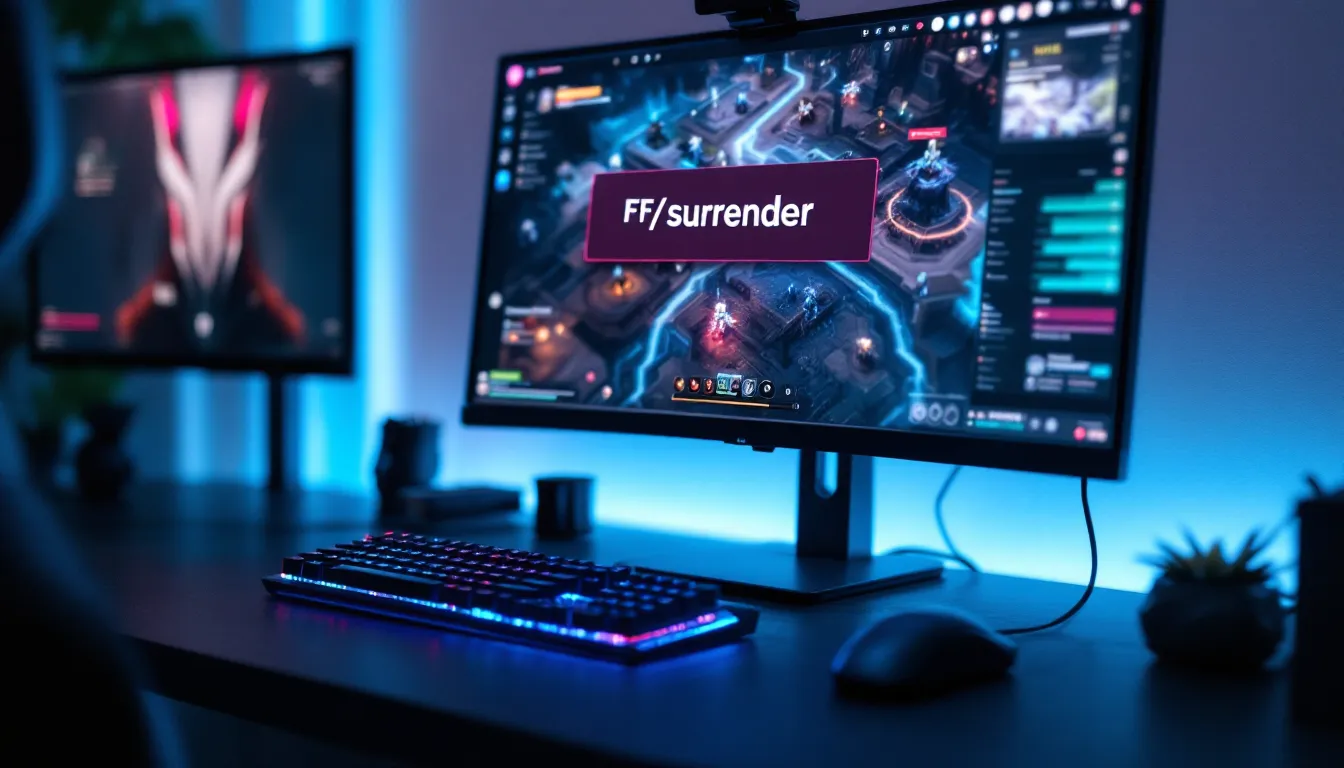
League of Legends has the most structured FF system. Teams can start a surrender vote at 15 minutes with unanimous agreement (5/5 votes) or at 20 minutes with a simple majority (4/5 votes). Players type /ff or /surrender in chat, which triggers a pop-up vote for the entire team.
The 15-minute “FF15” became such a meme in the League community that it’s now shorthand for giving up early. You’ll see players sarcastically type “FF15” after a single lost team fight, even when the game is still winnable. Riot Games has tweaked surrender timing over the years, earlier patches allowed FF at 20 minutes only, but player feedback pushed for the 15-minute option in clearly unwinnable games.
Dota 2 handles forfeits differently. There’s no official surrender button in standard matchmaking. Instead, players can call “GG” (good game) after 30 minutes, and if all five teammates type it, the ancient explodes and the match ends. This design choice reflects Dota’s philosophy that comebacks are always possible, pro matches have swung from 20k gold deficits.
Valorant adopted the FF system from League. Teams can surrender at Round 5 if the vote is unanimous (5/5) or after Round 8 with a 5/4 majority. Competitive Valorant players are generally less quick to FF than MOBA players since rounds are shorter and eco rounds can swing momentum fast.
Smite allows surrenders at 10 minutes with a unanimous vote or at 15 minutes with a majority. The shorter timer reflects Smite’s faster average match length compared to League or Dota.
When Players Use FF During Competitive Matches
Players typically call FF in specific scenarios:
- Blowout score differentials: Down 15+ kills in a MOBA, or losing 0-9 in Valorant.
- AFK or disconnected teammates: A 4v5 is statistically unwinnable in most games.
- Toxic team environment: When flaming and infighting kill coordination, some players FF to escape.
- Smurfing opponents: Facing obvious high-rank players on new accounts makes the match feel unplayable.
- Time constraints: Players with limited gaming time might FF a likely loss to squeeze in another match.
Ranked players FF more readily than casual players. In ranked, LP or MMR losses are inevitable in a doomed game, so minimizing time waste makes sense. In normals or unranked, players often fight until the nexus explodes for practice or fun.
FF Meaning ‘Final Fantasy’ in Gaming Contexts
Outside of competitive matches, FF is widely recognized as shorthand for Final Fantasy, one of gaming’s most iconic JRPG franchises. When discussing games, mods, or RPG mechanics, FF almost always refers to Square Enix’s legendary series.
You’ll see this usage in Reddit threads like “Which FF has the best combat?” or “FF7 Remake vs FF16.” Gaming communities use the abbreviation casually, assuming everyone knows it means Final Fantasy. Individual titles get numbered abbreviations: FF7 (Final Fantasy VII), FF14 (Final Fantasy XIV), FF10 (Final Fantasy X), and so on.
This meaning of FF predates the competitive forfeit usage by decades. Final Fantasy launched in 1987, and players have abbreviated it as FF since the SNES era. The franchise’s cultural impact is massive, over 173 million copies sold worldwide, spanning 16 mainline games plus spin-offs, movies, and an MMO (FF14) with millions of active subscribers.
In broader gaming discussions, especially on forums, Discord servers, or game guides focused on RPGs, FF defaults to Final Fantasy unless the conversation is specifically about competitive multiplayer.
How to Tell Which FF Meaning Applies
Context is everything. Here’s how to decode which FF someone means:
Competitive multiplayer context: If the discussion involves MOBAs, shooters, or ranked matches, FF means forfeit/surrender. Phrases like “FF at 15,” “vote FF,” or “our team wanted to FF” clearly indicate surrender.
RPG or single-player context: If the topic is JRPGs, turn-based combat, or Square Enix, FF means Final Fantasy. “FF6 has the best villain” or “FF14 endgame is amazing” are obvious.
Game genre: Shooters might mean friendly fire. RPG discussions default to Final Fantasy. MOBA chat almost always means forfeit.
Numbered references: “FF7,” “FF10,” or “FF14” always refer to Final Fantasy titles. Nobody says “forfeit 7.”
Chat timing: If someone types “FF” during a losing match, they’re calling to surrender. If it appears in a gaming news thread or Discord channel discussing games generally, assume Final Fantasy.
When in doubt, the surrounding conversation makes it clear. Gamers rarely confuse the meanings within their own communities, MOBAs players know FF means forfeit, JRPG fans know it means Final Fantasy, and shooter players know it means friendly fire.
FF as ‘Friendly Fire’ in Shooter Games
In tactical shooters and military games, FF stands for friendly fire, damage dealt to your own teammates. It’s a mechanic that adds realism and consequence to shooting, forcing players to check their targets and communicate before firing.
Friendly fire changes how games feel. In FF-enabled modes, you can’t spray wildly into a chokepoint where teammates are pushing. Grenades become high-risk plays. Flashbangs and molotovs require callouts. One careless burst can team-kill and cost your squad the round.
Some games enable FF by default in competitive or hardcore modes, while others disable it entirely. The presence or absence of friendly fire shapes meta strategies, games without FF encourage aggressive stacking and explosive spam, while FF-enabled games reward precise aim and positioning.
Games Where Friendly Fire Matters Most
Rainbow Six Siege is notorious for friendly fire. Casual players experience “Reverse Friendly Fire” (damage reflects back to the shooter after the first team kill), but in competitive, FF is fully enabled. One stray headshot can lose the round. The community even has a term, “getting TK’d” (team killed), and toxic players sometimes abuse FF to grief.
Counter-Strike 2 keeps friendly fire on in all competitive modes. AWP shots and HE grenades can wreck teammates as easily as enemies. Pro players practice crossfire setups and nade lineups obsessively to avoid accidental team damage. In CS, FF adds a skill ceiling, managing fire discipline under pressure separates good players from great ones.
Escape from Tarkov treats friendly fire as part of its hardcore realism. There’s no UI to identify teammates clearly, so voice comms and positioning are life-or-death. Accidental team kills happen constantly, especially in chaotic factory raids.
Squad and Hell Let Loose simulate military realism with full friendly fire. Artillery strikes, tank shells, and MG fire can annihilate your own squad. These games demand tight communication and role discipline, players who ignore FF wipe entire teams.
Valorant disables friendly fire for bullets but enables it for abilities. You can’t shoot teammates, but a Raze grenade or Brimstone molly will damage allies. This hybrid system keeps ability usage tactical without punishing crossfire too harshly.
Call of Duty typically disables FF in standard multiplayer but enables it in Hardcore and Search & Destroy modes. Many FPS players prefer hardcore modes specifically for the added tension that friendly fire creates.
Friendly fire also appears in co-op PvE games like Deep Rock Galactic, where dwarves can accidentally shoot each other during chaotic bug swarms. It’s part of the charm, apologizing over voice chat after a stray pickaxe swing becomes a bonding moment.
Other Lesser-Known FF Meanings in Gaming
Beyond the big three (forfeit, Final Fantasy, friendly fire), FF has niche meanings in specific gaming subcultures. These are less common, but you’ll encounter them in the right communities.
Fast Forward in Speedrunning and Emulation
In speedrunning and emulator communities, FF often means fast forward. Emulators like RetroArch and PCSX2 include a fast-forward hotkey (often labeled FF) that speeds up gameplay 2x-10x. Speedrunners use this during practice to skip cutscenes or quickly replay sections.
You’ll see streamers say “I’m gonna FF through this dialogue” or “hit FF to get to the boss faster.” It’s also common in tool-assisted speedruns (TAS), where runners manipulate frame-by-frame inputs and fast-forward through executed segments.
Some modern games include built-in fast-forward features. Final Fantasy remasters (ironically another FF) let players toggle 3x speed to grind battles faster. Octopath Traveler and other retro-inspired JRPGs adopted this feature after players loved it in FF remasters.
Full Force and Niche Gaming Communities
Full Force appears in some trading card games and tabletop communities, though it’s rare in mainstream gaming. In certain CCGs, “FF” might describe playing all resources or going all-in on a strategy.
In fighting game communities, FF occasionally stands for force field or refers to specific move notations in games like Tekken or Street Fighter. But, these are highly niche and context-dependent, most FGC players use frame data notation instead.
In MMO raiding, some guilds use FF as shorthand for full flask or full food, meaning everyone should use consumables for a boss attempt. This is guild-specific slang rather than universal terminology.
The bottom line: if you see FF in a gaming context and it doesn’t match forfeit, Final Fantasy, or friendly fire, ask for clarification. Niche communities often develop their own shorthand that doesn’t translate outside their circles.
How to Use FF Correctly in Different Gaming Scenarios
Knowing what FF means is one thing. Using it appropriately without tilting your team is another. Here’s how to navigate FF in different gaming contexts.
Communicating FF in Team Chat
In MOBAs and competitive games, don’t just spam “FF” without context. Explain why you think the game is lost: “They’re up 3 drakes and 8k gold, FF at 20?” is more constructive than spamming “ff ff ff ff.”
Use the actual command rather than just typing the letters. In League, type /ff or /surrender to start the vote. In Valorant, type /ff in chat. Don’t assume typing “FF” alone will trigger anything, it’s just chat spam unless you use the command.
If your team votes no, respect it. Continuing to spam FF or soft-inting (playing poorly on purpose) because you didn’t get your way is toxic and reportable. Some games, especially competitive team-based titles, penalize players who repeatedly abuse surrender votes or throw matches.
In shooters, “FF” usually appears as a warning: “Watch FF at the door” or “FF enabled, be careful.” Use it to remind teammates to check targets, especially after spawning or during chaotic pushes.
Understanding FF Etiquette and Sportsmanship
Don’t FF too early. Calling surrender at 5 minutes because you died twice is poor sportsmanship. Comebacks happen, especially in games with rubber-band mechanics or late-game scaling champions.
Don’t flame teammates who vote no. Some players want to practice even in losing games. Others believe in fighting until the end. Your time isn’t more valuable than theirs.
Do FF if teammates are AFK or trolling. There’s no honor in a 3v5. Save everyone’s time and mental health.
Don’t hold teams hostage. If it’s 4-1 on the FF vote and the game is clearly over, the lone “no” voter is griefing. But if it’s 3-2, the game might still be competitive.
In ranked, FF strategically. If you’re down 2-13 in Valorant with no win condition, FFing saves MMR decay time and lets you queue fresh. But if you’re one round away from a derank game, fighting to the end might be worth the practice.
In casual/normals, let people play it out. Unranked games are for learning and fun. Not everyone treats them as pure efficiency.
The Psychology Behind Forfeiting: Why Players Call FF
Why do players want to FF? It’s more than just impatience, there’s real psychology behind the forfeit mentality.
Loss aversion drives a lot of FF behavior. Research shows people feel losses roughly twice as intensely as equivalent gains. When players sense a loss is inevitable, continuing feels psychologically painful. FFing is a way to cut losses and regain control.
Time value matters in competitive gaming. Ranked grinds require dozens or hundreds of matches. Spending 40 minutes on a doomed game means fewer chances to climb. High-ELO players FF more readily because they optimize for volume, more games equals more LP over time, even with the occasional winnable game surrendered.
Tilt prevention is underrated. Playing from behind is stressful. Constant deaths and lost objectives compound frustration. Some players FF not because the game is truly unwinnable, but because they’re tilted and don’t want to mental boom further. A quick FF resets their mental state for the next match.
Learned helplessness kicks in during stomps. When every team fight goes 0-5 and every objective is lost, players stop believing they can impact the outcome. FF becomes an escape from powerlessness.
Team dynamics influence FF votes. If your team is flaming each other, coordination is dead. Even if the gold difference is manageable, social collapse makes comebacks nearly impossible. Players FF to escape toxic environments as much as losing games.
Cognitive biases distort perceptions. Players overestimate how far behind they are and underestimate comeback potential. A 4k gold deficit at 20 minutes feels insurmountable, but one won team fight can flip momentum. The FF15 meme exists partly because players give up on winnable games.
Interestingly, data from Riot Games shows that a significant percentage of surrendered League matches were statistically winnable based on gold differential and team composition scaling. But statistics don’t capture team morale, and morale matters more than gold in solo queue.
Common Misconceptions and Mistakes About FF
Let’s clear up some common FF mistakes and myths.
Misconception: FFing always saves time. Sometimes yes, sometimes no. If your team is one team fight away from either losing or stabilizing, playing it out takes 5 more minutes. FFing and queuing into a new 30-minute match doesn’t necessarily save time if you lose that one too.
Mistake: Typing “FF” without using the command. In League or Valorant, just typing “FF” in chat does nothing. You need to type /ff or /surrender to trigger the actual vote. New players often don’t realize this and wonder why nothing happens.
Misconception: FF means you’re a quitter. Not true. Strategic forfeiting is smart time management in competitive games. Pro teams scrim dozens of games daily and FF unwinnable scenarios constantly to maximize practice efficiency.
Mistake: FFing in promos or critical ranked games without trying. Some players tilt-FF in their Diamond promos because of an early deficit. That’s not strategic, that’s mental weakness. Critical matches deserve full effort regardless of early game state.
Misconception: All five players must vote yes. In most games, only a majority is needed after a certain time threshold (like 20 minutes in League). You don’t need unanimous agreement unless it’s an early surrender window.
Mistake: Not recognizing FF means friendly fire in shooters. Typing “FF” in a Rainbow Six Siege match about your teammate accidentally shooting you is correct. But typing “FF” in Valorant text chat to surrender won’t work, you need the /ff command. Context matters.
Misconception: FFing doesn’t affect MMR/rank. It does. A loss is a loss, whether you FF at 15 minutes or lose at 45. The only difference is time spent. Some players think FFing “doesn’t count”, it absolutely does.
Mistake: FFing when your team has late-game scaling. If you’re playing Kayle, Kassadin, and Vayne against an early-game comp, FFing at 15 minutes throws away your win condition. Understanding team composition power spikes matters before calling FF.
FF Across Different Gaming Platforms and Genres
FF usage and meaning shift depending on platform and genre. Here’s how it breaks down.
PC Gaming FF Usage
PC gaming, especially in MOBAs and tactical shooters, uses FF most heavily. League of Legends on PC has the most developed FF culture, surrender votes are a core part of the ranked experience. Dota 2 players resist FFing philosophically, but the /gg call exists for unwinnable matches.
PC shooters like CS2, Valorant, and Rainbow Six Siege all integrate FF mechanics (both forfeit votes and friendly fire) into their competitive modes. PC players also encounter FF as fast-forward in emulators and speedrunning tools, since those communities are heavily PC-based.
PC chat systems make typing /ff or /surrender natural. Console players, by contrast, often navigate menus or use voice commands for surrenders.
Console and Mobile Gaming Differences
Console: Games like Smite and Overwatch 2 on PlayStation and Xbox have surrender options, but players use them less frequently than PC counterparts. Typing in console chat is slower, so voice comms or menu-based surrender votes are more common. Console Call of Duty players experience friendly fire in Hardcore modes, but “FF” is less common in text chat, players just say “watch your fire” over mic.
Console communities also discuss “FF” as Final Fantasy more than PC players, since the franchise has deep PlayStation roots (FF7, FF10, FF15, FF16 are all iconic PlayStation titles).
Mobile: Mobile MOBAs like Mobile Legends and League of Legends: Wild Rift include surrender options, but mobile players FF even faster than PC players. Mobile gaming sessions are shorter, and players on phones are more likely to have real-life interruptions. If a match goes south, mobile players surrender quickly to move on.
Mobile shooters like PUBG Mobile and Call of Duty: Mobile generally disable friendly fire to keep casual gameplay accessible. “FF” in mobile gaming communities more often references Final Fantasy (especially with FF Brave Exvius and other mobile FF titles) than forfeit or friendly fire.
Cross-platform games: Titles like Rocket League and Fortnite that span PC, console, and mobile treat FF (forfeit) consistently across platforms. The surrender option works the same way regardless of input device, though PC players type /ff while console players use menu options.
Genre matters as much as platform. Battle royales rarely have FF surrender options, you’re eliminated when you die, so forfeiting doesn’t apply. Fighting games don’t use FF at all. MMOs might use FF for Final Fantasy references but not for forfeit. Understanding your game’s genre and platform norms prevents miscommunication.
Conclusion
FF is one of gaming’s most versatile abbreviations, shifting meaning based on context, genre, and community. In competitive multiplayer, it’s the surrender call that saves time, or sparks debates about mental fortitude. In shooter communities, it’s the friendly fire mechanic that demands precision and communication. In broader gaming culture, it’s shorthand for one of the most legendary JRPG franchises ever made.
The key is reading context. If your team is down 0-8 in Valorant and someone types “FF,” they want to surrender. If a forum thread asks “Which FF has the best story?” they’re talking Final Fantasy. If your Rainbow Six teammate yells “Watch FF.” they’re warning you about friendly fire.
Understanding ff meaning gaming helps you communicate better, avoid misunderstandings, and engage more effectively with your teammates, whether you’re voting to end a doomed match, coordinating fire discipline, or debating which Final Fantasy deserves a remake next. Now you’ve got the complete picture.